Dosage guide
Zeaxanthin Dosage Per Day: 5 Checks Before You Pick a Number
There is no official daily target for zeaxanthin or lutein. Food gives most American adults about 1 to 2 mg a day. The AREDS2 formula used 10 mg of lutein and 2 mg of zeaxanthin in people with AMD. Zeaxan prints no amounts, so five checks help you choose your next step with a doctor.
Written by the Zeaxan editorial teamMedically reviewed by Dr. Allen Ho, MD, PhysicianReviewed · 8 min read
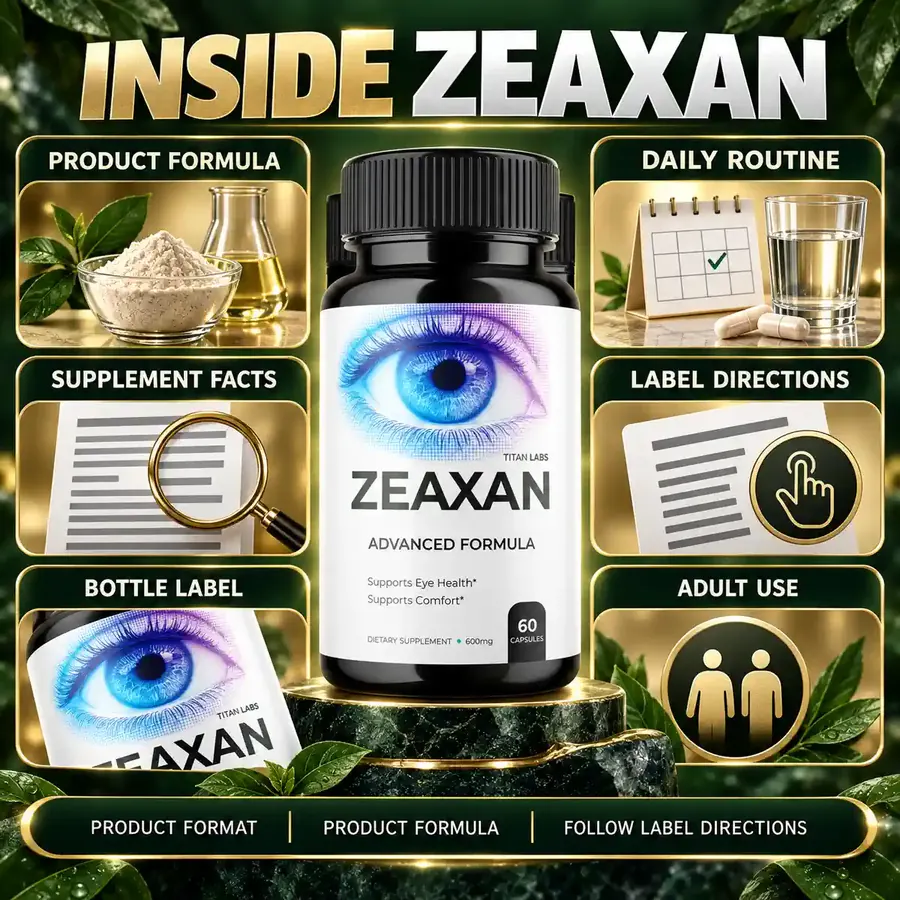
At a glance
Key facts
- No official daily target exists for lutein or zeaxanthin. Food gives most American adults about 1 to 2 mg a day of the two together.
- AREDS2 used 10 mg of lutein and 2 mg of zeaxanthin a day, with vitamins C and E, zinc and copper, in people who already had AMD.
- The 10 mg figure is lutein, not zeaxanthin. Zeaxanthin was 2 mg.
- Zeaxan prints no lutein or zeaxanthin amount. Our best-case ceilings are about 6 mg and about 3 mg per 2 capsules, and the real figures are likely lower.
- A safe upper limit for lutein and zeaxanthin is not published in our sources.
- The Zeaxan label says 2 capsules daily and do not exceed the recommended dose.
Overview
How many mg of zeaxanthin should you take a day?
People type this question in many shapes: how many mg, what dose for eye health, what is the recommended daily amount, what about seniors. One honest answer covers them all. There is no official daily amount to quote. What you can do is look at three reference points, food, the AREDS2 study and your own label, and ask a doctor which one applies to you.
Is there an official target?
Check what food already gives you.
What did AREDS2 use?
Mind the 10 mg trap.
What is in Zeaxan?
Read the ceilings, not guesses.
Can you take too much?
Look at the whole blend.
Who should ask first?
Seniors, AMD, medicines.
Check 1
Check 1: Is there an official daily amount of zeaxanthin?
No. A 2021 review in Advances in Nutrition found that American adults get an estimated 1 to 2 mg a day of lutein and zeaxanthin from food, and that there is no official daily recommendation for either one (Wilson et al., 2021). That means there is no shortfall number to fix. It also means any bottle that claims a perfect daily dose is quoting a study, not a rule.
The main food sources are green leafy vegetables, egg yolks, corn and squash. Exact milligrams per egg, per cup of kale or per handful of spinach are not published in our sources, so we will not guess them. If you want more of both pigments without a pill, adding those foods is a simple start that carries no supplement risk.
Check 2
Check 2: What dose did the AREDS2 study use?
The best-known doses are 10 mg of lutein and 2 mg of zeaxanthin a day, alongside vitamin C 500 mg, vitamin E 400 IU, zinc 80 mg and copper 2 mg (NEI, AREDS2). That formula lowered the risk of advanced AMD by about 25% over five years in people who already had intermediate or late AMD.
Here is the trap behind searches for zeaxanthin 10 mg. The 10 mg belongs to lutein. Zeaxanthin was 2 mg. Anyone who reads zeaxanthin 10 mg on a page may be mixing the two up. Also note that the study used the six nutrients together. Taken alone, lutein and zeaxanthin showed little effect in a Cochrane review (Cochrane, 2023), and the National Eye Institute says supplements cannot prevent AMD (NEI, 2020).
Check 3
Check 3: How much zeaxanthin is in Zeaxan?
The label does not say. The only number is the 600 mg blend total for 11 ingredients. Zeaxanthin (5%) is listed tenth, so it can weigh at most one-tenth of the blend, which is 60 mg of extract. If 5% of that extract is zeaxanthin, the ceiling is about 3 mg per serving of 2 capsules, and the real amount is probably well below it. Lutein, listed fifth, has a ceiling of about 6 mg.
| Reference point | Lutein | Zeaxanthin | Note |
|---|---|---|---|
| Official daily target | None set | None set | Wilson et al., 2021 |
| Typical food intake | About 1-2 mg together | About 1-2 mg together | Estimate for American adults |
| AREDS2 formula | 10 mg | 2 mg | With vitamins C and E, zinc and copper |
| Zeaxan per 2 capsules | Not published; ceiling about 6 mg | Not published; ceiling about 3 mg | Best-case arithmetic only |
Our Zeaxan expectations checklist shows how these numbers line up. In short, you cannot call Zeaxan an AREDS2 match.
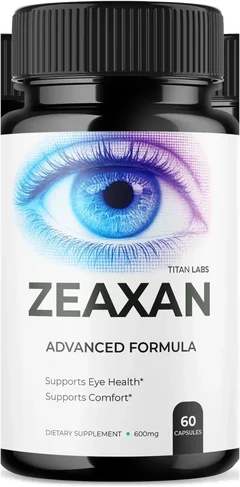
If you try it, follow the labelZeaxan's dose is the label's 2 capsules a day, and the listing shows its price and terms before you pay.
See today's price and guaranteeThis site is paid a commission on orders placed through its links, and the commission does not shape our wording.
Check 4
Check 4: Can you take too much lutein and zeaxanthin?
A safe upper limit for lutein and zeaxanthin is not published in our sources, so we cannot name one. What we can say is that the Zeaxan label asks you not to exceed the recommended dose, which is 2 capsules a day. Taking extra does not speed anything up and adds more of the whole blend.
The practical risks lie elsewhere in the blend. Vitamin B6 has an upper limit of 100 mg a day, and high doses for a year or longer can harm nerves (NIH ODS, B6). Choline has an upper limit of 3,500 mg a day (NIH ODS, choline). If you add a second eye product to Zeaxan, the lutein and zeaxanthin might double, and the B6 might add up too. The blend prints no single amounts, so a pharmacist's judgment is the best tool.
Check 5
Check 5: Who should ask a doctor before choosing a dose?
Anyone with AMD, since the studied option for intermediate AMD is the AREDS2 formula with printed doses, which Zeaxan is not. Anyone taking a blood thinner, thyroid medicine or metformin. Anyone pregnant or nursing, and anyone under 18, since the label says Adult Use Only.
What about seniors? The label allows adult use with no upper age limit, but older adults should check their medicines first and keep eye exams every 1 to 2 years after 65 (AAO, 2021). How long should you take lutein and zeaxanthin? Our sources give no set length. Zeaxan's label gives a daily serving and no time limit, so review it with your doctor at each eye exam.
FAQ
Frequently asked questions
How many mg of zeaxanthin should I take a day?
There is no official daily target. Food gives most American adults about 1 to 2 mg of lutein and zeaxanthin together (Wilson et al., 2021). The AREDS2 formula used 2 mg of zeaxanthin, in people with AMD, with five other nutrients. Ask your doctor what suits you.
Is zeaxanthin 10 mg a normal dose?
The 10 mg figure in AREDS2 is for lutein, not zeaxanthin, which was 2 mg (NEI, AREDS2). We found no source that gives 10 mg as a zeaxanthin dose, so treat that number with care.
How much zeaxanthin is in Zeaxan?
Not published. Zeaxanthin (5%) is listed tenth in a 600 mg blend. Our best-case ceiling is about 3 mg per serving of 2 capsules, and the real amount is likely lower.
What is a safe amount of zeaxanthin?
A safe upper limit is not published in our sources. The Zeaxan label says not to exceed the recommended dose of 2 capsules a day. Check totals with a pharmacist if you take other eye products.
How much zeaxanthin should I take for macular degeneration?
Ask your eye doctor. For intermediate AMD, the studied option is the AREDS2 formula with printed doses of lutein, zeaxanthin, vitamins C and E, zinc and copper (NEI, AREDS2). Zeaxan is not that formula.
What is the right zeaxanthin dosage for seniors?
Not published for seniors specifically. The Zeaxan label allows adult use with no upper age limit. Older adults should have a pharmacist check their medicines and keep eye exams every 1 to 2 years after 65.
Where we land
Our view
Our view on dosage is modest. The honest numbers are few: no official target, about 1 to 2 mg from food, and 2 mg of zeaxanthin in a study of people with AMD. Beyond them, anyone who gives you a precise mg for your eyes is going past the evidence.
For Zeaxan, the dose is unknown, so the safest approach is to follow the label, keep to 2 capsules, and let your doctor guide any change. Zeaxan is not FDA approved and is not a treatment for AMD or any other disease.
Last updated .
Terms before the capsulesKeep to the printed serving, and use the listing's return window if it does not suit you.
See today's price and guaranteeWe earn a commission when you buy through our order links. It does not change what we write.
Written and reviewed by
Plain-language pages built from the bottle label and linked medical sources.
Last updated . Read our editorial standards and how we check reviews. This website is run by an authorized U.S. retailer, not by the manufacturer. We are paid a commission when you buy through our order links.
Lutein and zeaxanthin in Zeaxan · What AREDS2 means · Lutein and zeaxanthin research