Start here
Lutein and Zeaxanthin Basics: 6 Facts for Beginners
Lutein and zeaxanthin are two closely related carotenoids, yellow plant pigments found in leafy greens, egg yolks, corn and squash. They are not the same thing, though studies usually test them together. Six facts explain what they are, where they sit in the eye, what research shows and what our sources leave unanswered.
Written by the Zeaxan editorial teamMedically reviewed by Dr. Allen Ho, MD, PhysicianReviewed · 7 min read
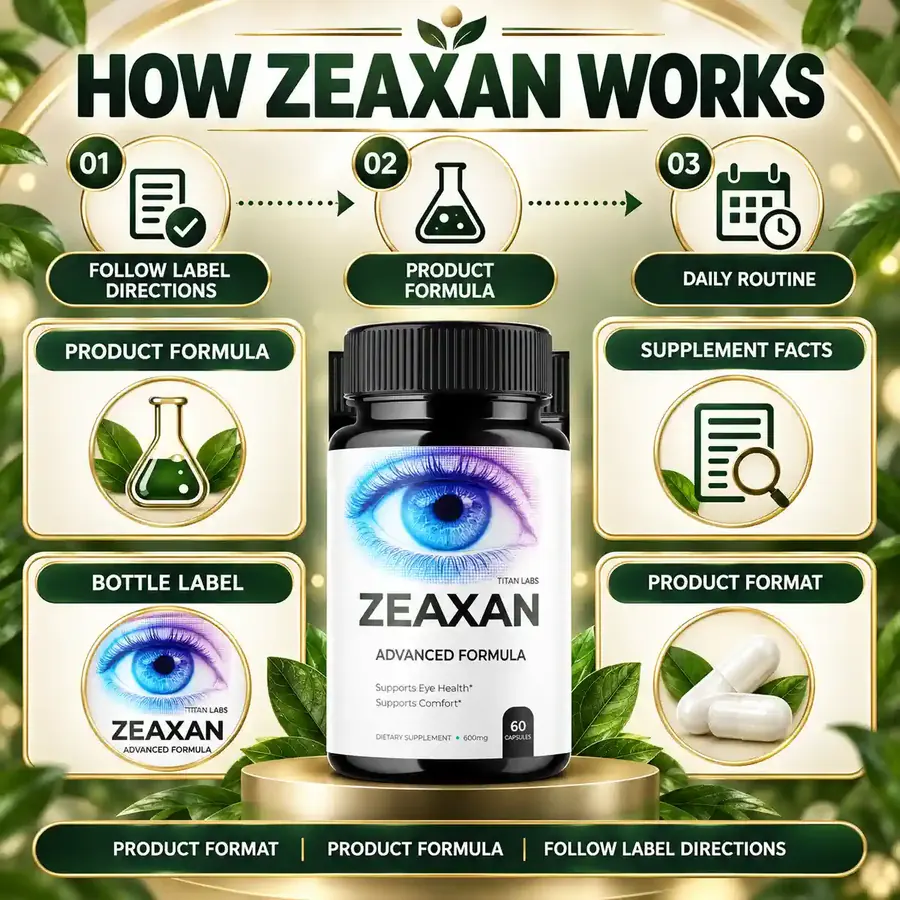
At a glance
Key facts
- Lutein and zeaxanthin are carotenoids, yellow plant pigments that your body gets from food. Your body cannot make them.
- They are separate carotenoids, and most studies test the pair together. The AREDS2 daily amounts were 10 mg of lutein and 2 mg of zeaxanthin.
- The macula is the small part of the eye that gives sharp central vision, and researchers measure macular pigment there.
- Main food sources: green leafy vegetables, egg yolks, corn and squash. There is no official daily target.
- Supplements cannot prevent AMD, and the studied formulas showed no benefit for people without AMD.
- Astaxanthin, meso-zeaxanthin, vitamin A conversion and solubility are not covered by our sources.
Fact 1
What are zeaxanthin and lutein?
They are carotenoids. That word means a family of yellow, orange and red pigments that plants make. You meet them on your plate rather than in a pharmacy: leafy greens, egg yolks, corn and squash are the usual sources (Wilson et al., 2021). Your body cannot make either one, so food or supplements are the only way to get them.
They matter to eye research because they are the two carotenoids used in the AREDS2 formula. That is also why an eye supplement with the word zeaxan or lutein on it can look convincing before you read the label. The pigments are real and studied. Whether a particular capsule holds a useful amount of them is a different question.
Fact 2
Is lutein the same as zeaxanthin?
No. They are close relatives, yet each is its own carotenoid. Most studies test the pair together, and both come from the same foods, but they are given in different amounts. In AREDS2 the daily amounts were 10 mg of lutein and 2 mg of zeaxanthin (NEI, AREDS2).
Why are they paired? Our sources do not explain the reason, so we will not invent one. What the sources show is a pattern: the main trials and reviews treat them as a duo. On the Zeaxan label, they sit apart, lutein fifth and zeaxanthin tenth in an 11-ingredient blend, and neither amount is printed.
Fact 3
Where in the eye do these two pigments work?
Researchers care about the macula, the small part of the eye that gives you sharp central vision (MedlinePlus, 2024). A 2021 review looked at how lutein and zeaxanthin intake relates to macular pigment, the amount of these pigments measured in that spot (Wilson et al., 2021).
A pigment reading is a lab number. It is not proof that anyone sees better, and it is not proof that a disease is slowed. Keep that gap in mind when a headline says a nutrient boosts the eye. Read the dose, the group studied and what was actually measured.
Fact 4
Which foods give you zeaxanthin and lutein?
Green leafy vegetables, egg yolks, corn and squash. American adults get an estimated 1 to 2 mg a day from food, and there is no official daily target (Wilson et al., 2021). If you want to know how to get zeaxanthin naturally, the answer is to eat those foods regularly. It is slow, plain and low-risk.
How much sits in one egg, a cup of kale or a handful of spinach? Those figures are not published in our sources, so we leave them out. The same goes for goji berries. We would rather say not published than quote a number we cannot trace.
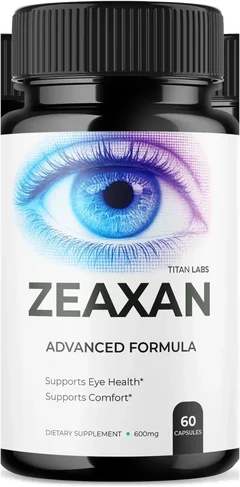
If you are curious about the productZeaxan holds both pigments in a blend, and the listing shows its price and terms before you pay.
See today's price and guaranteeWe earn a commission when you buy through our order links. It does not change what we write.
Fact 5
What do the studies say lutein and zeaxanthin do for eyes?
The clearest finding is narrow. In AREDS, a formula with set doses of both pigments plus vitamins C and E, zinc and copper lowered the risk of advanced AMD by about 25% over five years in people who already had intermediate or late AMD (NEI, AREDS2). A 2023 Cochrane review found that the two pigments alone, against a placebo, showed little effect (Cochrane, 2023).
The National Eye Institute says supplements cannot prevent AMD, and the formulas showed no benefit for people with early AMD or no AMD (NEI, 2020). Can they improve vision or reverse cataracts? None of our sources says so. Cataracts are common with age, and surgery is the only way to remove one (NEI, cataracts). Blurry sight is a reason to book an eye exam.
Fact 6
What do our sources not tell you about zeaxanthin?
A fair amount, and it is better to say so. People search many side questions, and several have no answer in the sources we use. The table lists them so you do not waste time hunting on this page.
| Question | Our sources |
|---|---|
| Is zeaxanthin an antioxidant? | Not described in our sources |
| Is it fat soluble or water soluble? | Not published |
| Is it the same as astaxanthin? | Astaxanthin is not covered, so no comparison is possible |
| What is meso-zeaxanthin? | Not covered |
| Can it be converted to vitamin A? | Not published |
| Is it good for skin or kidneys? | Not published |
| Can pets take it? | Not published; the Zeaxan label says Adult Use Only |
| Does it affect blood pressure? | Not published |
| Foods and typical intake | Leafy greens, egg yolks, corn, squash; about 1-2 mg a day for American adults |
Where a source is missing, treat any confident web answer with care. For product-specific questions, see what is Zeaxan and zeaxanthin dosage per day.
FAQ
Frequently asked questions
What is zeaxanthin?
A carotenoid, a yellow plant pigment that your body gets from food. Your body cannot make it. It is listed tenth of eleven in the Zeaxan blend, and the amount is not published.
Is zeaxanthin just another name for lutein?
No. They are separate, closely related carotenoids, and most studies test the pair together. The AREDS2 daily amounts were 10 mg of lutein and 2 mg of zeaxanthin (NEI, AREDS2).
Are lutein and zeaxanthin vitamins or minerals?
Our sources call them carotenoids, plant pigments, which is a different group from vitamins and minerals. The Zeaxan blend lists vitamins B6 and B12 separately from the two pigments.
What foods have zeaxanthin?
Green leafy vegetables, egg yolks, corn and squash (Wilson et al., 2021). Typical American intake from food is about 1 to 2 mg a day of lutein and zeaxanthin together, and amounts per food are not published here.
Is zeaxanthin the same as astaxanthin?
Astaxanthin is outside our sources, so no comparison is possible. The names differ, so check any product's label to see which one it holds.
Is it safe to take lutein and zeaxanthin every day?
Our sources list no specific side effects for the two pigments, but they set no upper limit either. Zeaxan's label says not to exceed the recommended dose, and anyone with a medical condition should ask a physician first.
Where we land
Our view
The basics are friendly. Two plant pigments, found in everyday foods, studied for the macula. The trouble starts when a supplement page stretches those basics into promises. The research is narrow and tied to doses, groups and full formulas.
Our view: eat the foods, keep your eye exams, and treat any supplement as an optional extra. Zeaxan includes both pigments in an unknown amount. It is not FDA approved and does not treat or prevent any eye disease.
Last updated .
Read the label firstGo through the facts here first, then open the listing and decide in your own time.
See today's price and guaranteeThis site is paid a commission on orders placed through its links, and the commission does not shape our wording.
Written and reviewed by
Plain-language pages built from the bottle label and linked medical sources.
Last updated . Read our editorial standards and how we check reviews. This website is run by an authorized U.S. retailer, not by the manufacturer. We are paid a commission when you buy through our order links.
Lutein and zeaxanthin in Zeaxan · Research, study by study · Eye health guide